In aviation, there’s a chart every helicopter pilot knows well.
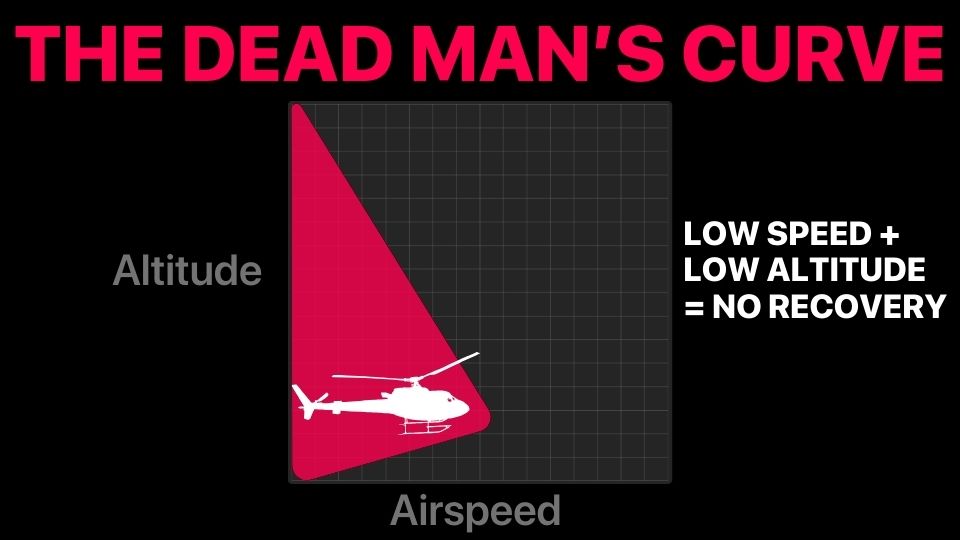
It’s called the Height–Velocity Diagram.
Most people call it something else.
Dead Man’s Curve.
It shows a dangerous combination of low altitude and low airspeed where, if something goes wrong, recovery becomes nearly impossible.
Too low to glide.
Too slow to climb.
Pilots avoid this zone because hesitation inside it can be catastrophic.
Leadership has a version of this, too.
I call it decision altitude.
In helicopters, hovering requires constant micro-adjustments. Wind, weight, temperature, and terrain are always changing.
The aircraft isn’t truly still.
It’s working extremely hard just to stay in place.
Leadership can feel the same.
You’re analyzing the situation.
Gathering more information.
Waiting for perfect clarity.
From the outside, it looks stable.
Inside, you’re burning enormous energy without moving forward.
Hover isn’t progress.
It’s suspended motion.
The longer a pilot stays in Dead Man’s Curve, the higher the risk.
Leadership works the same way.
There’s a point where waiting becomes the most dangerous decision of all.
Information slows.
Options narrow.
Conditions change.
Suddenly, the window to act disappears.
If you liked this article, check out how to implement your own Daily Inspection.
History is full of examples.
Kodak invented the digital camera in 1975.
But the company hesitated.
Leadership feared disrupting their film business, so the technology sat on the shelf while competitors moved forward.
The result?
An industry giant that once dominated photography filed for bankruptcy decades later.
The risk wasn’t a lack of innovation.
It was waiting too long to act.
In aviation, survivability depends on altitude and airspeed.
In leadership, it depends on information and timing.
Too early, and you lack data.
Too late, and the opportunity is gone.
Strong leaders understand this balance.
They gather enough information to move—but not so much that movement stops entirely.
Because once you remain in hover too long, the system starts working against you.
Where are you hovering right now?
What decision have you been analyzing instead of acting on?
Increase your decision altitude.
Move forward before the window closes.
If this resonated, join The Shift — my weekly newsletter on leadership, energy, and systems — where we build sustainable momentum, one shift at a time.
Chris Wilson
Weekly insights on leadership, decision-making, and momentum. Published every Monday since 2020.

Leadership keynote speaker, former helicopter pilot, and creator of the Momentum Shift Framework. Chris helps leaders navigate change, make decisions under pressure, and build sustainable momentum.


Weekly insights on leadership, execution, and momentum under pressure.
© 2026 Chris Wilson Co. All Rights Reserved